Search This Blog and Its Links

Wednesday, March 31, 2010

Built For Change Part Two - Built To Fail

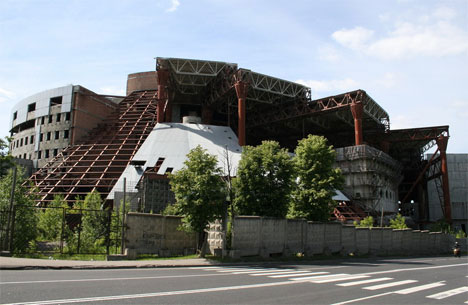
So many of the good ideas of the 1960s weren't all that good.  Many of the domes A-frames and contemporary designs are now abandoned: too difficult to work with or they leaked or were just uncomfortable to live in.  Here are a few pictures that underscore the idea of architectural failures from the past.  First is this dome in Arizona.

Next is a water park in Russia.
An abandoned apartment complex in Taipei.
And the Grandaddy of all fails, Frank Lloyd Wright's Falling Waters which leaks like a sieve and is falling apart because of the stresses inherent in the design.

Tuesday, March 30, 2010

How Buildings Learn Part Three - Built For Change

Most buildings exist in a state of change, whether they are amenable to it or not. People change buildings, the elements change buildings and laws change buildings. Some buildings just resist change more than others.

In installment three, Brand tells you why the new architecture of the 19060s (domes in particular) failed and why traditional architecture works. Some simple and profound lessons here.

Monday, March 29, 2010

Low Road Part Two - Tiny Houses Movement

There's a movement across the world of people who are dedicated to the idea that we don't need to live in huge monster McMansions. These are the tiny house people. They promote the idea of living in small dwellings. By small I mean as little as 60 square feet. And boy do they have some neat looking houses. 

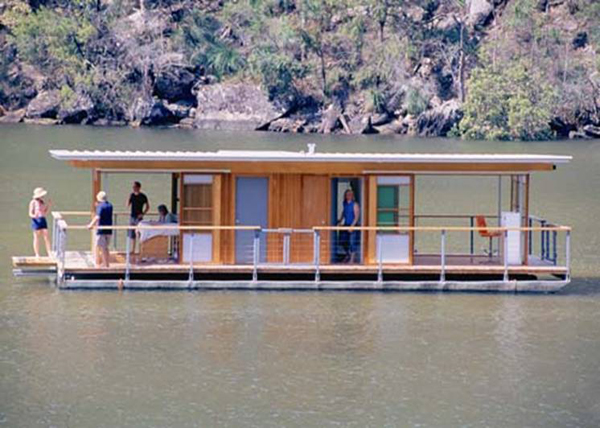
Here is a selection of some intriguing tiny homes. Just think of how life can be simplified by going smaller. Less heat, electricity and water used. Less upkeep and quicker to clean. Easy to add on to. Easy to find room for. These are just a few examples of the tiny homes people are building and living in today.

Think of how many people that can't afford a standard half million dollar mortgage, can afford a home like this. They might be cramped when the kids come, but hey, just build another right?

Below are some links to these four examples and to some websites that might be of interest.

Photo One - Kjellander + Sjoberg Arkitektkontor Designs
Photo Two - Arkiboat Houseboat by Drew Heath
Photo Three - Caree de'Toiles
Photo Four - Stefan Doll House by Lloyd House
Tiny House Design
The Tiny Life
Coming Unmoored - One woman's adventure in tiny living

Sunday, March 28, 2010

How Buildings Learn Part Two - I Take the Low Road

The most easily adaptable buildings are low road buildings. Easy to change. No one cares what you do with them. Building 20 at MIT.

In part two of How Buildings Learn, Brand shows us how people takes cheap marginal buildings and make them home and work space.

Saturday, March 27, 2010

Can You Hear Me Now?

As a little side trip in our inquiry into how buildings learn, this video shows how pirate radio stations in London adapt to an urban environment to provide music, news and other information not covered by commercial, licensed stations. Although it is mostly about the stations and their operation, the adaptations they make to a city's buildings to accommodate a station is obvious.

If you can wade through the accents, you'll see some plucky, talented young people create programming for an unserved audience. I especially like the comment about how the underground stations feed commercial radio content.

As cities in developing countries (and the developed world) grow, I'm sure we'll see more homebrew broadcasting of all sorts.

Friday, March 26, 2010

How Buildings Learn

Stewart Brand is one of my favorite nonfiction writers. I just finished "Whole Earth Discipline" and will blog about it in the next week. Today I want to write about his 1994 book "How Buildings Learn: What Happens After They’re Built."

A building has a lifespan. It starts with design. Then comes construction. After that, habitation. Now the really interesting things happen. As people use the building, it goes through growing pains. People like to change things. A building either welcomes or resists change. This, along with the march of time, causes it to age. Eventually it will be reborn or die. That is what this book is about: the process and progression. People like buildings that are easily adaptable to their needs. People don't like buildings that aren't. That is also what this book is about.

In 1997 the BBC created a six-part, three-hour series based on the book featuring Stewart as the host and narrator. It is as enjoyable as the book itself. Over the next few months I will be posting a lot about buildings, as architecture and simple utilitarian structures have always fascinated me.

This video is the first of six, which I will post sequentially. It is entitled "Flow" and concerns the fluidity with which buildings must adapt (and be adaptable) to be useful and loved. Have a look.

Thursday, March 25, 2010

Tiny Robot Destroys Cancer

It seems that nanoparticles have been created that target and destroy cancer cells. Trials are going on that show promising results so far and it appears that there are no side effects. If this is successful, it could be the end of one of mankind's greatest plagues.

Here's a link to the Caltech press release about this breakthrough.

Wednesday, March 24, 2010

The Basic Laws of Human Stupidity

I often contemplate why people are so stupid. Why they are willing, as the old saying goes, to cut off their nose to spite their face. I came across this enlightening article on the subject about fifteen years ago in Whole Earth Review and I thought it would be fun to point folks to it and see what they think.

Briefly the laws are:

1. Always and inevitably everyone underestimates the number of stupid individuals in circulation.

2. The probability that a certain person will be stupid is independent of any other characteristic of that person.

3. A stupid person is a person who causes losses to another person or to a group of persons while himself deriving no gain and even possibly incurring losses.

4. Non-stupid people always underestimate the damaging power of stupid individuals. In particular non-stupid people constantly forget that at all times and places and under any circumstances to deal and/or associate with stupid people always turns out to be a costly mistake.

5. A stupid person is the most dangerous type of person.

and its corollary............

A stupid person is more dangerous than a bandit.

The full article is here.

Tuesday, March 23, 2010

Jeux Sans Frontières

There is a shocking video up on BBC News today. It was an experiment disguised as a pilot for a new game show in France in which a "contestant" is apparently given progressively stronger electrical shocks when they answer questions incorrectly. The person giving the shocks is one of "80 people taking part in what they thought was a game show pilot.......they were told they wouldn't win anything, but they were given a nominal 40 euro fee. Before the show, they signed contracts agreeing to inflict electric shocks on other contestants."

The electrical shocks are fake. The "contestant" is an actor feigning pain and convulsions. The person giving the fake shocks is being tested to see if and how far they will obey orders.

If this at all sounds familiar, it is. This is an update on Milgram's 27, a famous psychology experiment done in 1961 in which students were asked to do the same thing. Stanley Milgram was trying to see how people related to authority figures and how people who were basically good could be made to do unethical or even evil things.

In the French "game show," only 16 of the 80 participants stopped before the last, potentially lethal shock.

Hitler would have been proud.

Sunday, March 21, 2010

Cars Lose Rights

I have often joked that if aliens surveyed our world they would conclude that automobiles are the dominant species. The resources that we allocate to the use and maintenance of our cars is truly staggering. Just look at all the roads and an entire energy system dedicated to their operation. Some folk's garage is larger than their living space.

As an enthusiastic walker, I find it heartening that at long last, the feds have finally placed the needs of pedestrians and cyclists alongside, not behind, those of motorists. The Department of Transportation, now says that the automobile will no longer take complete precedence in federal transportation planning.

Wow, how refreshing. Or maybe we've finally seen that cars aren't the future.

Read more at: DOT Policy Statement on Bicycle and Pedestrian Accommodation