Almost a century ago, Dr. Walther Bauersfeld invented the geodesic dome, which was later patented and popularized by Buckminster Fuller. During the 1960s, young people, who thought they were inventing a new world, built many of these structures thinking that they would be the future of mankind's habitations. Well, they leaked and were difficult to build and live in.
Fast forward to today and the dome is once again becoming popular. Various advancements have solved the problems that had been encountered and now folks have decided that they make good guesthouses, small vacation homes and handy emergency shelter.
Enter the Zendome company. This outfit from Germany provides quick to assemble, structurally resilient domes for industry and private use. The domes listed are very affordable, too.
Monday, October 10, 2011
Sunday, October 9, 2011
Fog Collectors
There are many places on the face of the Earth where the ground is dry, but the air is not. FogQuest is a non-profit Canadian outfit geared to helping communities in places where access to water is a problem. They help residents of these areas by showing them how to build fog and rainfall collectors to squeeze enough water out of their environment to sustain their communities.
Here's a short video on their work.
Saturday, October 8, 2011
La Cocina, the Food Entrepreneur Incubator
If you've followed my postings, you know there's a food revolution going on. People are becoming aware of what they eat and where it comes from. What is also happening is that there is an entrepreneurial revolution going on at the same time.
La Cocina is a non-profit organization in San Francisco that is dedicated to transforming talented home cooks into successful businesswomen by removing obstacles to entrepreneurship. It's organizational director, Caleb Zigas say that, "..the barriers to entering the food industry are high and they are real." He adds that commercial kitchen space is prohibitively expensive. Potential entrepreneurs face additional problems such as perception barriers, language barriers and class barriers and these issues make it extremely difficult to start and maintain a small business. His job has been to find the resources to take these budding businesswomen from home kitchens to viable business.
It looks like things have been going well for La Cocina. The client base has expanded from six to over 50 and is still growing. You can read more about La Cocina here.
La Cocina is a non-profit organization in San Francisco that is dedicated to transforming talented home cooks into successful businesswomen by removing obstacles to entrepreneurship. It's organizational director, Caleb Zigas say that, "..the barriers to entering the food industry are high and they are real." He adds that commercial kitchen space is prohibitively expensive. Potential entrepreneurs face additional problems such as perception barriers, language barriers and class barriers and these issues make it extremely difficult to start and maintain a small business. His job has been to find the resources to take these budding businesswomen from home kitchens to viable business.
It looks like things have been going well for La Cocina. The client base has expanded from six to over 50 and is still growing. You can read more about La Cocina here.
Friday, October 7, 2011
Fun Time!
Here's a great thing to do for Halloween. Without spending lots of money, you can decorate an entire house by cutting large silhouttes for all the windows. This article at Craft website shows you how and gives some inspiration for subject matter.
Boo!
Boo!
Thursday, October 6, 2011
Wednesday, October 5, 2011
What Are You Going To Do With That College Degree?
Director Peter Sellars is one of the great minds of our time. He was already famous as an undergrad at Harvard. His theatrical productions are simply stunning and always controversial. In this hour-plus talk he asks a simple question: Why are you going to college when there are no jobs for you?
Asking this question makes you think about why you go to school and what you want out of it. If there aren't any (or very few) jobs available, then why train for something that you can't get (and perhaps don't even want to do)? Maybe you can train to be an artist instead of a software engineer. Maybe you should think about taking classes in theater rather than learning to be an attorney. He suggests that the very best thing to do is follow your heart when it comes your education. And do it not for the money, but because your heart is in it. He suggests there's a very good chance that economic and social systems are poised for change and people with this idea in mind might be better prepared to to deal with these changes as new systems of commerce and society develop.
His simple idea is that the world has forever changed and why make your decisions based on conditions that no longer exist? One of the things I tell young people is that they are being educated to live in the past because their parents think that's the only safe place left. Local governments and educators are complicit in this because they all want to keep their jobs. And then we wonder why we are losing our competitve edge.
He says, "We're living in a period where you're mostly surrounded by lies and most everything you encounter is propaganda. We're here on Earth to move things, to change things, to transform things."
Peter's talk starts at 12:30.
Asking this question makes you think about why you go to school and what you want out of it. If there aren't any (or very few) jobs available, then why train for something that you can't get (and perhaps don't even want to do)? Maybe you can train to be an artist instead of a software engineer. Maybe you should think about taking classes in theater rather than learning to be an attorney. He suggests that the very best thing to do is follow your heart when it comes your education. And do it not for the money, but because your heart is in it. He suggests there's a very good chance that economic and social systems are poised for change and people with this idea in mind might be better prepared to to deal with these changes as new systems of commerce and society develop.
His simple idea is that the world has forever changed and why make your decisions based on conditions that no longer exist? One of the things I tell young people is that they are being educated to live in the past because their parents think that's the only safe place left. Local governments and educators are complicit in this because they all want to keep their jobs. And then we wonder why we are losing our competitve edge.
He says, "We're living in a period where you're mostly surrounded by lies and most everything you encounter is propaganda. We're here on Earth to move things, to change things, to transform things."
Peter's talk starts at 12:30.
Tuesday, October 4, 2011
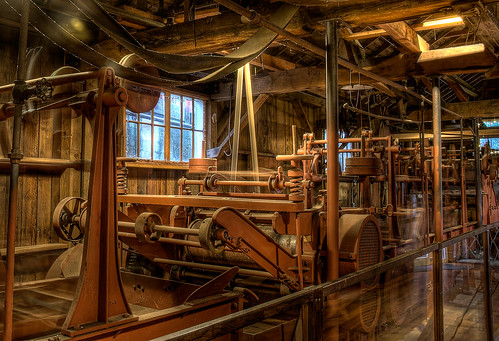
Machinery As You Have Never Seen It
This series of photographs highlights the use of HDR (high dynamic range) in digital photography. It allows you to manipulate the range of light to dark, color saturation and other factors to deliver images that would be next to impossible to do any other way. I think that you'll agree that the result is stunning if, at some times, a little surreal.
The series comes from one of my favorite blogs, Lightstalking.
Monday, October 3, 2011
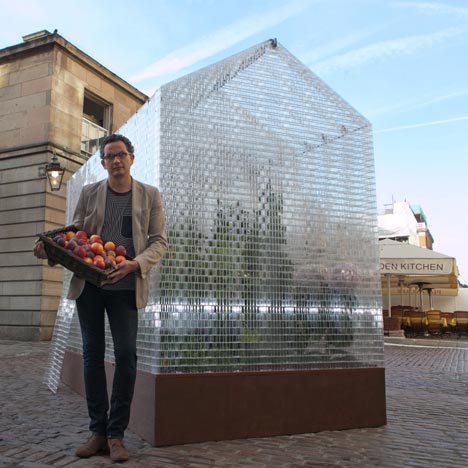
LEGO Greenhouse
LEGO UK commissioned award-winning designer, Sebastian Bergne, to create a public installation using the iconic bricks, as part of the London Design Festival 2011. His finished work, entitled the "LEGO Greenhouse", was on display in the North East Piazza, Covent Garden, the West End's premier retail, cultural and entertainment district, from September 15th to 25th.
This is the first fully functioning greenhouse built entirely from LEGO bricks. The walls, the floors, even the earth is LEGO bricks. The plants and vegetables growing inside are however, entirely real.
Sunday, October 2, 2011
Garage Remodeled as Home
Live in the country or suburbs? Ever wanted a small abode in a large city? Photographer Jérémie Buchholtz lived in Paris but wanted a small place in Bordeaux. Enter Architect Matthieu de Marien. Marien took a junk-filled garage on a private historic alleyway on Bordeaux’s right bank and turned it into a beautiful small (441 square feet) home.
This short article by Matt Hickman describes the conversion on his blog.
Saturday, October 1, 2011
LOST...and found
Kim Obermeyer, rock star biologist and Holly Beck entrepreneurial pro surfer, writer, and model have spent the last couple of years finding , in their own words, "ways to live simply and sustainably, spending time barefoot in the sand, eating locally and organically, using solar energy and constructing a comfortable habitat without having to work a 'real' job to do it." Sounds good to me.
Unfortunately, they had to move away from America to do it. Here's a link to their website, hip-E habitat. Surfing, yoga, jungle architecture and real food. How can it get better than this?
Subscribe to:
Posts (Atom)