We waste energy. There's no doubt about it. We especially waste it making light. 1.4 billion people around the world don't have access to an electrical grid. In many parts of the world, when the sun goes down, that's the end of the day. Getting light into rural areas of the developing world usually involves burning kerosene, which is costly, dirty and can also be unhealthy.
Steve Katsaros has a solution. His company Nokero (short for "No Kerosene"), set out to get light into as many hands as possible in the developing world. The Nokero N200 is his creation.
It's great for camping, too. I think I'm going to get several.
Everywhere you look you see the end of oil as an energy source. One of the main indicators is higher prices for things because of higher energy costs. So much talk about peak oil, drill-baby-drill and other such nonsense.
Well the end of oil appears to be just around the corner. Researchers have discovered a great alternative solution to gasoline: 1 gram of thorium can produce the equivalent energy of 7,500 gallons of gasoline.
Here are two articles that discuss the subject. The first is about the research and technology behind this and the second concerns the experimental vehicle designed to use this breakthrough.
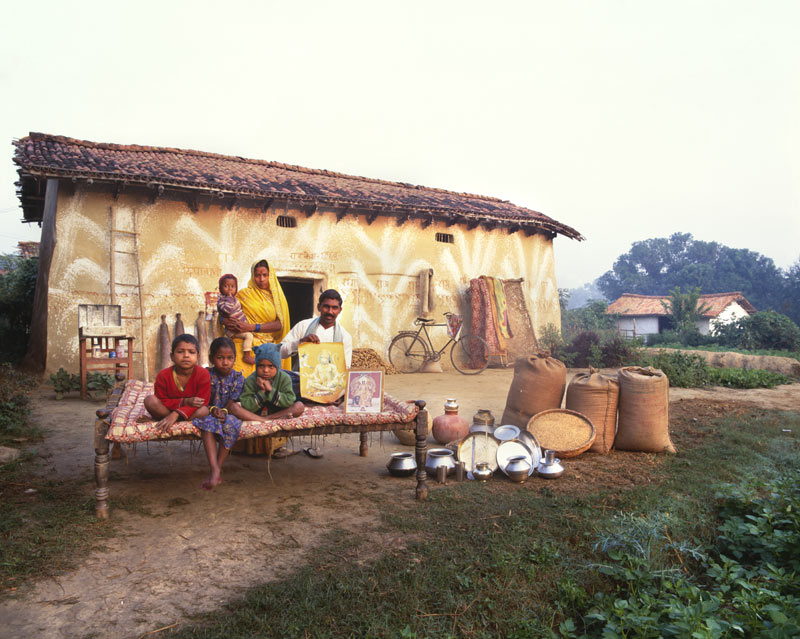
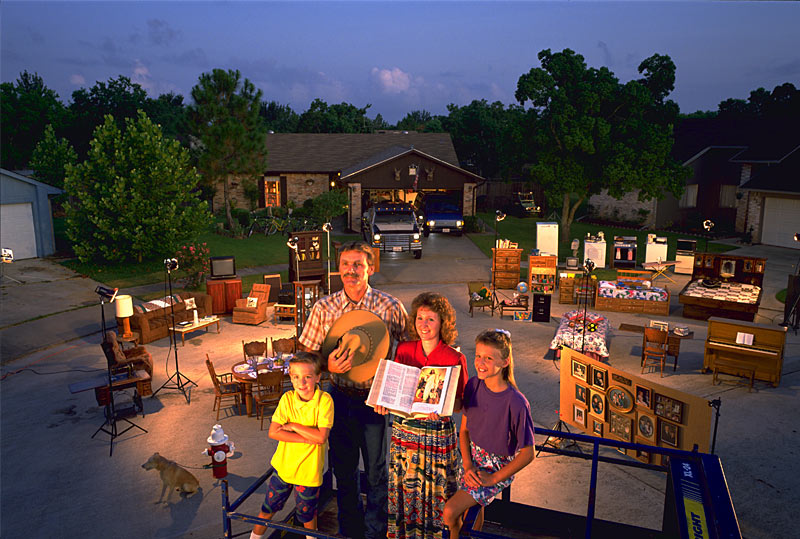
As I consider the re-adjustments that are already occurring in America I am struck by how we tend to think that we are what we have. Now, I am not saying that we each necessarily view ourselves that way, just each other. We judge each other by the amount and quality of the material possession we possess. Perhaps this should stop if we are ever to become truly civilized.
photo: Peter Menzel
In his book, Material World: A Global Family Portrait, photojournalist Peter Menzel, traveled to 30 different countries to show 30 statistically average families, their homes and what they own.
I saw this on a blog last August and filed it for later use. Following the current theme of this blog and with economic reality hitting so many of us squarely in the face these days, I think it might be a good time to post it now.
Michael Pozner was living in a little less than 500 square feet when he decided that he was going to optimize the space he had for maximum use. This is the result. This makes a lot of sense for high density, urban living such as his location, New York City. It also makes sense for any environment where space is at a premium. I especially like the pull-out stairs as drawers.
My guess is that as we continue to experience economic downsizing in this country, we, as a practical people (as opposed to our "leaders") will turn to a number of ways to get back on our feet.
This small, orange-colored home was built in the backyard of Karen Chapple, a University of California, Berkeley, associate professor of city and regional planning and faculty director of the Center for Community Innovation. She is heading a study funded by the UC Transportation Center to determine how many of these accessory homes could be built around five Bay Area Rapid Transit stations in the East Bay, and how they might affect the local economy.
Imagine if urban areas around the country adopted ideas like this, not only placing small, affordable housing near mass transportation, but also work. Think of all the energy, gasoline, money we'd save. Think of the communities we could build.
Here's a follow-up article from Stewart Brand concerning slums and their contribution to the vibrancy of urban life. It is interesting to note that New York City was surrounded by slums about 150 years ago. Look how that turned out.
I am fascinated by cities. I grew up in a rural place. There were farms all around me during my childhood. Cities were a place of wonder. I saw them on television and they were distant, gleaming and alluring. When I was nine, I went to the World's Fair in NYC and I was forever changed by what I saw. Rural life just didn't cut it after that.
In my twenties I went to live in Boston, Massachusetts and got to see first hand what city life was really like. As with anything there was good and bad, expectations met and disappointments. But I'll never forget how exhilarating it was. I still miss Harvard Square a lot.
One of my favorite thinkers, Stewart Brand, had a wonderful talk at TED a few years ago about how the rural areas of the developing world were emptying out and the people moving to the cities and how this would start a second economic, social and technological revolution. The talk below by Geoffrey West at TEDGlobal extends this idea and shows how the properties of cities - wealth, crime rate, walking speed and many other aspects can be deduced from a single number: the city's population.