
I love Monty Python. I love Terry Gilliam. I love animation.
Here's how you do it.................................................................
Thursday, August 11, 2011


Wednesday, August 10, 2011
Whatcha' Got?
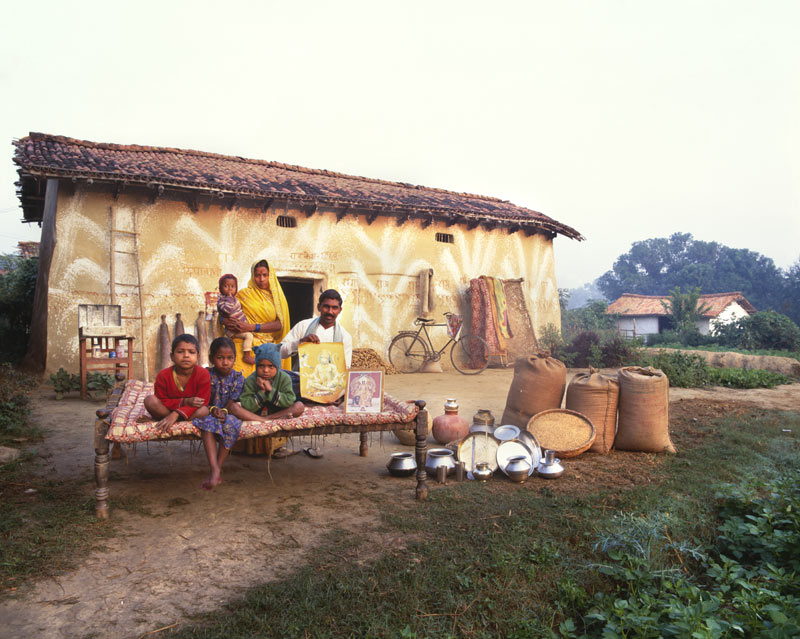 |
| photo: Peter Ginter |
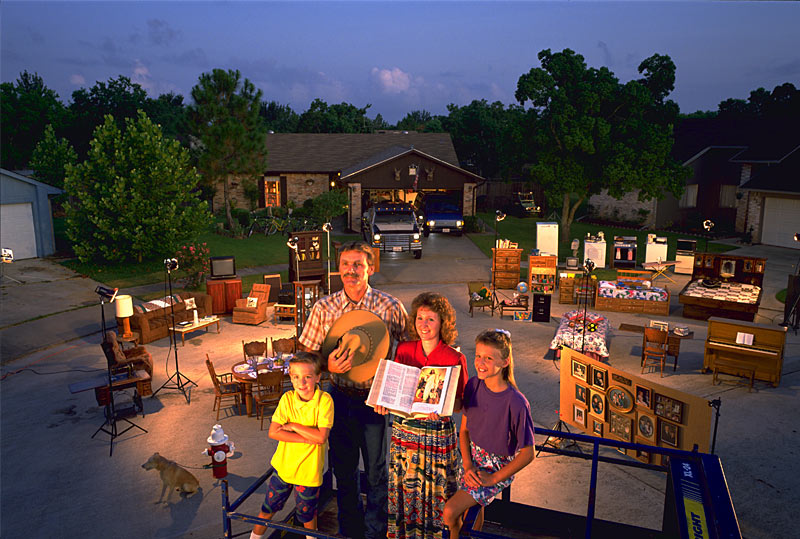 |
| photo: Peter Menzel |
Perspective.
Tuesday, August 9, 2011
Recession Special: Home & Workplace In Ten Feet By Forty

Michael Pozner was living in a little less than 500 square feet when he decided that he was going to optimize the space he had for maximum use. This is the result. This makes a lot of sense for high density, urban living such as his location, New York City. It also makes sense for any environment where space is at a premium. I especially like the pull-out stairs as drawers.
Monday, August 8, 2011
Backyard Solutions To Urban Planning Issues

This small, orange-colored home was built in the backyard of Karen Chapple, a University of California, Berkeley, associate professor of city and regional planning and faculty director of the Center for Community Innovation. She is heading a study funded by the UC Transportation Center to determine how many of these accessory homes could be built around five Bay Area Rapid Transit stations in the East Bay, and how they might affect the local economy.
Imagine if urban areas around the country adopted ideas like this, not only placing small, affordable housing near mass transportation, but also work. Think of all the energy, gasoline, money we'd save. Think of the communities we could build.
Berkeley Institute of Ubran and Regional Development
Saturday, August 6, 2011
More On The Future Of Cities
Here's a follow-up article from Stewart Brand concerning slums and their contribution to the vibrancy of urban life. It is interesting to note that New York City was surrounded by slums about 150 years ago. Look how that turned out.
How Slums Can Save The Planet
How Slums Can Save The Planet
Friday, August 5, 2011
Where We'll Live In The Future
I am fascinated by cities. I grew up in a rural place. There were farms all around me during my childhood. Cities were a place of wonder. I saw them on television and they were distant, gleaming and alluring. When I was nine, I went to the World's Fair in NYC and I was forever changed by what I saw. Rural life just didn't cut it after that.
In my twenties I went to live in Boston, Massachusetts and got to see first hand what city life was really like. As with anything there was good and bad, expectations met and disappointments. But I'll never forget how exhilarating it was. I still miss Harvard Square a lot.
One of my favorite thinkers, Stewart Brand, had a wonderful talk at TED a few years ago about how the rural areas of the developing world were emptying out and the people moving to the cities and how this would start a second economic, social and technological revolution. The talk below by Geoffrey West at TEDGlobal extends this idea and shows how the properties of cities - wealth, crime rate, walking speed and many other aspects can be deduced from a single number: the city's population.
In my twenties I went to live in Boston, Massachusetts and got to see first hand what city life was really like. As with anything there was good and bad, expectations met and disappointments. But I'll never forget how exhilarating it was. I still miss Harvard Square a lot.
One of my favorite thinkers, Stewart Brand, had a wonderful talk at TED a few years ago about how the rural areas of the developing world were emptying out and the people moving to the cities and how this would start a second economic, social and technological revolution. The talk below by Geoffrey West at TEDGlobal extends this idea and shows how the properties of cities - wealth, crime rate, walking speed and many other aspects can be deduced from a single number: the city's population.
Thursday, August 4, 2011
Wednesday, August 3, 2011
How About This?
Could be our future they're looking at. Check out this New York Times article on the Dutch and tell me what you think.

The Dutch Way: Bicycles and Fresh Bread

The Dutch Way: Bicycles and Fresh Bread
Tuesday, August 2, 2011
Open Source Civilization Kit
With the current political debacle threatening to undermine our economy, we should, once again, be concerned with going it "on our own." I don't mean running into the woods with a gun and tent and a gallon jug of water. I mean that we should figure just what it takes to maintain a civilized standard of living and then do something substantive about insuring that those things get done. Leave the squabbling to those better suited to do it in Washington. That's why they go there, not to help us.
Marcin Jakubowski has a Ph. D. in fusion physics and is a TED 2011 Fellow. He is in the process of developing a toolkit of "50 different Industrial Machines that it takes to build a small civilization with modern comforts," called the Global Village Construction Set. It includes everything from a tractor to a 3-D printer, pieced together with interchangeable parts, motors and power units as if it were a "life-sized lego set." They currently have eight prototypes available on their Wiki, complete with designs, how-to videos for assembly, and budgets. His group, Open Source Ecology, wants the kit to lower "the barriers to entry into farming, building, and manufacturing" for the DIY community, and even extend their ideas for use in the developing world.
Here's a video of his group's project.
Here's a link to Jakubowski's four minute TED talk from 2011.
Marcin Jakubowski has a Ph. D. in fusion physics and is a TED 2011 Fellow. He is in the process of developing a toolkit of "50 different Industrial Machines that it takes to build a small civilization with modern comforts," called the Global Village Construction Set. It includes everything from a tractor to a 3-D printer, pieced together with interchangeable parts, motors and power units as if it were a "life-sized lego set." They currently have eight prototypes available on their Wiki, complete with designs, how-to videos for assembly, and budgets. His group, Open Source Ecology, wants the kit to lower "the barriers to entry into farming, building, and manufacturing" for the DIY community, and even extend their ideas for use in the developing world.
Here's a video of his group's project.
Here's a link to Jakubowski's four minute TED talk from 2011.
Monday, August 1, 2011
Is This Where We're Headed?
What with all the apocalyptic talk about the debt ceiling and political gridlock, I thought it might be a good idea to take a look at what happens when you can't pay your bills. This article highlights Detroit's lack of grocery stores and how folks are coping. Have a look. It's called Forget Urban Farms. We Need a Wal-Mart.


Subscribe to:
Posts (Atom)


